
As global concerns over environmental degradation and plastic pollution intensify, the search for sustainable alternatives to conventional plastics has gained momentum. Bioplastics, made from renewable biological sources, present a promising solution. But with various types of bioplastics available, each with its unique properties and applications, determining the “best” bioplastic can be challenging.
This article explores different bioplastics(PEF, PBS, PLA, PHA, PPC-P, etc.), evaluates them based on multiple criteria, and aims to identify the most suitable option for various needs.
Criteria for Evaluating Bioplastics
To determine the best bioplastic, we need to consider several factors:
- Environmental Impact: This includes biodegradability, compostability, and carbon footprint.
- Material Properties: These are the physical characteristics like strength, flexibility, and heat resistance.
- Production and Cost: This involves the sources of raw materials, manufacturing processes, and overall cost efficiency.
- Applications: Different bioplastics are suited for various uses such as packaging, consumer goods, and medical applications.

Overview of Leading Bioplastics
Let’s delve into some of the leading types of bioplastics:
1. Polyethylene Furanoate (PEF)
Pros:
PEF is made from 100% renewable resources and has better barrier properties (against gases like CO₂ and O₂) compared to PET, making it suitable for beverage bottles and food packaging. It is recyclable and has the potential to replace PET in many applications.
Cons:
PEF is still in the early stages of commercialization, and widespread adoption will depend on scaling up production and reducing costs.
2. Polybutylene Succinate (PBS)
Pros:
PBS is produced from succinic acid and butanediol, which can be derived from renewable resources. It is biodegradable, has good thermal properties, and is used in packaging, agricultural films, and disposable products.
Cons:
PBS is not as widely available as some other bioplastics, and production costs can be higher.
3. Polylactic Acid Plastics (PLA Plastics)
Pros:
PLA raw materials are renewable resources like corn starch or sugarcane. It is biodegradable and compostable under industrial composting conditions, making it environmentally friendly. PLA has good clarity, making it suitable for food packaging, disposable tableware, and 3D printing.
Cons:
PLA can be brittle and has lower heat resistance compared to some conventional plastics. It requires industrial composting facilities to degrade effectively, which are not always readily available.
4. Propylene Carbonate and Phthalate Plastics (PPC-P Plastic)
Pros:
PPC-P plastic is a co-polymer polymerized by three monomer units: Phthalate anydride, propylene and a certain amount of carbon dioxide. It has excellent gas and water vapor barrier properties while also providing carbon sequestration, complete biodegradability and extended shelf life.
PPC-P plastic is 100% biodegradable. And products made from PPC-P plastic can be recycled and reprocessed into granules, allowing for the creation of new products that maintain the same quality and physical properties as the original PPC-P items, while also meeting food contact standards.
The technology for synthesizing polycarbonate from carbon dioxide can reduce costs by over 50% compared to traditional fully biodegradable plastics. Moreover, the synthetic process is both safe and environmentally friendly.
5. Polyhydroxyalkanoates (PHA)
Pros:
PHAs are produced by bacterial fermentation of sugars or lipids and are fully biodegradable in both marine and soil environments. They offer good physical properties, making them suitable for packaging, agricultural films, and medical applications.
Cons:
PHAs tend to be more expensive to produce than other bioplastics, which can limit their widespread adoption. The PHA fermentation process is difficult to control, resulting in inconsistent quality between batches.
6. Starch-based Plastics
Pros:
These plastics are made from natural starch and are biodegradable. They can be blended with other materials to improve their properties and are commonly used in applications like bags, packaging materials, and agricultural films.
Cons:
Pure starch-based plastics may have poor mechanical properties and moisture resistance, requiring modification or blending with other polymers.
7. Cellulose-based Plastics
Pros:
Derived from cellulose (a major component of plant cell walls), these plastics are biodegradable and can be sourced from agricultural or forestry waste. They are used in applications like films, coatings, and injection-molded products.
Cons:
Production processes can be complex, and the materials may not have the same strength or flexibility as some conventional plastics.
Comparative Analysis
To determine the best bioplastic, we need a comparative analysis based on the aforementioned criteria.
1. Environmental Impact Comparison
Biodegradability and Compostability
PHA bioplastic excels with full biodegradability in marine and soil environments. PLA bioplastic and starch-based plastics are compostable but require industrial facilities. PBS and cellulose-based plastics are also biodegradable, while PEF is recyclable rather than compostable.
Compared to the above bioplastics, PPC-P plastic has better performance on biodegradability. It’s 100% biodegradable and recyclable. The physical properties of new plastic products made from rPPC-P recycled particles are the same as those of products derived from primary pure PPC-P resin, and are in line with food contact because the carbon dioxide high performance plastic is an amorphous polymer.

Carbon Footprint
PBS, PHA, and PLA bioplastic have lower carbon footprints as they are derived from renewable resources. PEF bioplastic also boasts a reduced carbon footprint due to its renewable origins.
PPC-P plastic directly use CO₂ as a raw material to synthesize plastics with an excellent CCUS carbon sequestration technology, it has created a new path for carbon capture and taken the lead in the world in the use of CO₂ polymers. Because it uses a large amount of CO₂ as raw material, its carbon footprint is negative, which is a rare negative carbon material.
It is an excellent solution in carbon emission reduction. It consumes carbon dioxide on a large scale. 200-400 kg of carbon dioxide can synthesize 1 ton of PPC-P. At the same time, it effectively replaces petroleum-based raw materials and achieves the environmental protection goal of dual carbon reduction.
2. Material Properties Comparison
Strength and Flexibility
PHA and PBS offer good physical properties, making them suitable for a variety of applications. PLA bioplastic, while useful, can be brittle. Starch-based and cellulose-based plastics may need blending for enhanced properties. PEF stands out for its excellent barrier properties and potential to replace PET.
Heat Resistance
PBS and PEF have better thermal properties compared to PLA bioplastic.
Barrier Properties
| Number | Material | 0xygenTransmission | Water Vapor Transmission | Carbon Dioxide Transmission |
| m³/(㎡·24h·0.1Mpa) | g/(㎡·24h) | m³/(㎡·24h·0.1Mpa) | ||
| 1 | EVOH(Ethylene 27%) | 0.1 | 47 | 0.9 |
| 2 | EVOH(Ethylene 44%) | 1.9 | 95 | 1.4 |
| 3 | PVDC | 4-10 | 0.4-1 | 0.3-0.7 |
| 4 | PPCP | 7.27 | 3.21 | 7.3 |
| 5 | PAN | 11.6 | 31-47.2 | 6 |
| 6 | PA6 | 35 | 93-155 | 43-59 |
| 7 | PPC | 108 | 36 | 2362 |
| 8 | PET | 74-138 | 27.4-46.7 | 35-50 |
| 9 | PVC | 77-310 | 13.2-71.3 | 140-400 |
| 10 | PP | 300 | 3.6-10.2 | 1200-1400 |
| 11 | PLA | 550 | 325 | 787 |
| 12 | PE | 500-700 | 15.2-23.4 | 2000-4000 |
| 13 | PS | 600-800 | 10.5-33.6 | 2400-3000 |
| 14 | PHB | 247 | 118 | / |
| 15 | PBAT | 1400 | 170 | 236 |
| Remark | Material thickness: 25.4 µm | |||
| Ambient conditions: temperature 23℃, humidity 50% RH | ||||
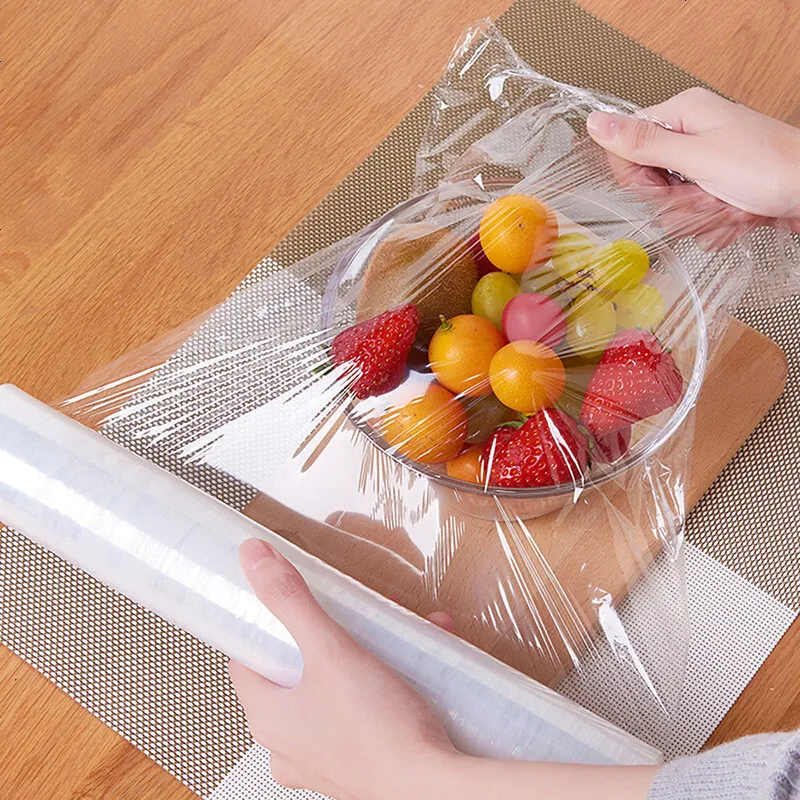
The oxygen barrier property of PPC-P plastic is 75.6 times that of PLA bioplastic, the water barrier property is 109 times that of PLA bioplastic, and the carbon dioxide barrier property is 108 times that of PLA bioplastic. It is the world’s only high-barrier biodegradable plastic and can replace the current mainstream high-barrier plastics in many fields.
3. Production and Cost Comparison
Ease and Cost of Production
Starch-based plastics and PLA bioplastic are relatively easier and cheaper to produce. PHA and PBS production is more complex and costly. PEF’s production is still being scaled, which affects its current cost-effectiveness. When PPC-P plastic can achieve 100% biodegradation, its cost is similar to that of ordinary non-degradable plastic products.
Scalability
PLA bioplastic and starch-based plastics have established production systems, making them more scalable. PHA and PBS bioplastic are catching up but are hindered by higher costs. PEF’s scalability is promising but still developing.
Currently, there is only one company in the world, LXBIO, which has the relevant technology to produce PPC-P plastic using carbon dioxide as raw material. LXBIO will continue to research and develop PPC-P plastic products to support the promotion and application of degradable plastics around the world.
4. Application Suitability
Packaging
PEF and PLA bioplastic are excellent for food packaging due to their clarity and barrier properties, respectively. Starch-based plastics are also useful for packaging.
With better barrier property performance than PLA bioplastic, PPC-P plastic offer a new and better solution to long-term harm of microplastics, plasticizers on the human body in the food field.
Consumer Goods
PLA bioplastic is popular in 3D printing, while PBS and PHA can be used in durable goods. PPC-P can be applied to both 3D and consumer goods.
Medical Applications
PHA is particularly suitable due to its biocompatibility.
Compatibility of Compounding Modification
PPC-P plastic can be used in almost all processing methods: blown film, extrusion coating, calendaring, injection molding, extrusion molding, foam molding, drawing, co-extrusion, biaxial stretching, and laminating. It can be blended and modified with a variety of biodegradable plastics, such as PBAT, PLA, PBS, PHA, etc. Its characteristics make it suitable for various application scenarios.
Conclusion
The best bioplastic depends on specific needs and criteria. For packaging and disposable items, PHA and PLA bioplastic stand out due to their biodegradability and renewable origins. Now, with the development of new biodegradable plastics, PPC-P plastic that use carbon dioxide as raw materials, there is a better choice for raw materials for packaging film and disposable items.
For applications requiring durability and heat resistance, PBS and PEF offer promising alternatives. Starch-based and cellulose-based plastics provide cost-effective options for broader applications, especially when blended with other materials to enhance properties. If you attach great importance to environmental protection and have high cost-effectiveness on the performance of raw materials, then choosingLXBIO’s PPC-P plastic must be your best solution.
As technology advances and production scales up, the landscape of bioplastics will continue to evolve, offering more sustainable solutions for various industries.


